Discover the differences between batch vs real-time data processing
3 MINUTE READ
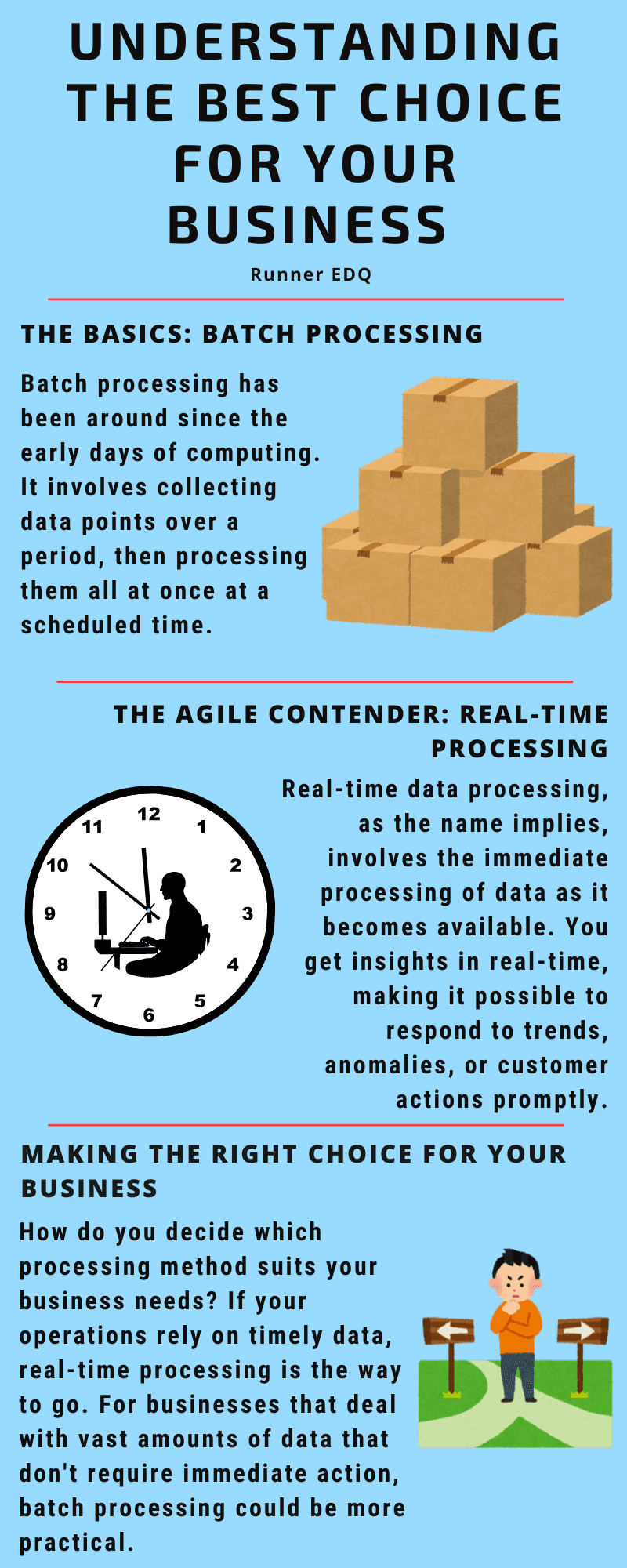

Data plays a critical role in guiding decision-making, enhancing customer engagement, and fostering growth. However, equally important to collecting and analyzing this data is knowing the best method to process it. Batch processing and real-time data processing emerge as two essential techniques in this context, each with its own set of benefits and considerations. Choosing the appropriate method, or a combination thereof, can greatly influence your business's operational efficiency, ability to respond to market demands, and overall customer satisfaction.
The Basics: Batch Processing
Batch processing has been around since the early days of computing. It involves collecting data points over a period, then processing them all at once at a scheduled time. Think of it like doing laundry; you wait until you have a full load before you run the washing machine.
Pros:
Efficiency at Scale: Handling massive amounts of data at once can be more economical, especially for businesses with vast data sets that aren't time-sensitive.
Simplicity: Batch processing systems are generally simpler to design, implement, and maintain, making them accessible for many businesses.
Cons:
Delayed Insights: Since data is processed in intervals (hourly, daily, etc.), the insights derived from that data aren't available in real-time.
The Agile Contender: Real-Time Processing
Real-time data processing, as the name implies, involves the immediate processing of data as it becomes available. It's akin to cooking a meal with ingredients delivered to your door at the exact moment you need them.
Pros:
Instant Insights: You get insights in real-time, making it possible to respond to trends, anomalies, or customer actions promptly.
Enhanced Customer Experience: Real-time responses can significantly boost customer satisfaction and engagement, providing personalized experiences.
Cons:
Complexity and Cost: Implementing a real-time processing system can be complex and expensive, requiring significant infrastructure and expertise.
Making the Right Choice for Your Business
So, how do you decide which processing method suits your business needs? Consider these factors:
Data Urgency: If your operations rely on timely data (e.g., stock trading, online retail), real-time processing is the way to go.
Complexity and Volume: For businesses that deal with vast amounts of data that don't require immediate action (e.g., historical data analysis), batch processing could be more practical and cost-effective.
Customer Expectation: Industries with high customer interaction levels (e.g., social media platforms, e-commerce) might find real-time processing crucial for staying competitive.
RunnerEDQ: Enhancing Your Data Processing Capabilities
We specialize in providing bespoke data processing solutions tailored to your unique business needs. Whether you're leaning towards the batch processing model for its efficiency and simplicity or venturing into the dynamic world of real-time data processing, our team of experts is ready to assist. We help businesses harness the potential of their data, ensuring faster, more accurate decision-making that propels growth.
In conclusion, understanding the strengths and limitations of both batch and real-time data processing methods is key to leveraging data effectively. By aligning your data processing strategy with your business objectives and customer demands, you can unlock new levels of efficiency and engagement. And with RunnerEDQ’s support, navigating the complexities of data processing becomes a smoother, more rewarding journey.